

The Green School Community : A microcosm of the rest of the world
14 May 2025
Eid Mubarak from Bali!
6 June 2025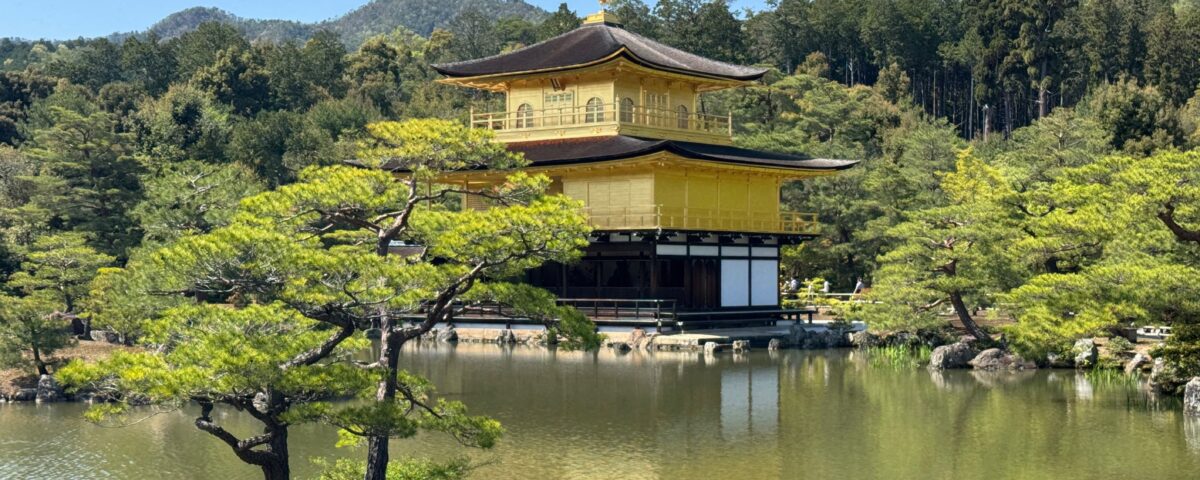
Mahnaz’s bit
I struggle to put into words personal life experiences sometimes, so below is a visual trail of our travels in one of the most extraordinary places we have ever been to. Suleiman and Anisa, on the other hand, are great with words so I have left our literal experience to them to describe.
First, a shout out to my dear friends Rachel, Zanna and Katie for their advice. We would have missed so much without your knowledge. And Zanna, thank you both so much for hosting us towards the end of our trip. I love how our girls have stayed connected, despite the space between them. What a blessing friendships can be and I have no doubt that Peppa will always be the connecting factor.
Tokyo – Overwhelm
I found central Tokyo to be more overwhelming than New York or London – this could well be my age, but I doubt it!

This precious little girl was one of the highlights of my trip. Anisa and I were speaking on a train – where no one speaks. All of a sudden I heard the sweetest little voice say hello. She had me. She told me that she was on holiday in Tokyo and she had a house somewhere else beginning with O (I can’t remember the name). She showed me her napkin and when we had the opportunity to sit down I spoke with her mother. She had lost her father when she was 5 months. When I got off the train, I cried. This girl saw straight through me and she had such a zen energy. I fell in love with her and wish I had exchanged details with her mother to stay in touch. One thing I miss about social media – having the ability to connect with others on my journey. I just need to remember to exchange emails now. I had done this with a family we met in Malaysia a few years ago who were Japanese. I emailed her before we left but we weren’t able to coordinate diaries for our trip.
(Photo credit to Anisa)
Meeting a real Geisha – so beautiful. We booked to hear her sing and play a card game – which Anisa thoroughly enjoyed. It was a touristy space so we didn’t get the chance to speak with her and ask questions, but the experience was facilitating. We tried to go to one of the only streets in Gion, in Kyoto, where Geishas still work today but we didn’t have the time. Apparently they are harassed with photos so much that there is a strict no photography policy on that street.




SO delicious!


Kyoto – Beauty

The first temple we saw in Kyoto. I was so keen to see it and cross the road, I completely forgot my manners and just walked across the way I would in London. Easily done but not such a good idea in Japan. The driver honked their horn for a good few minutes. I never made that mistake again.




The fisherman shouted out “Go Home!”. I think this is probably a common sentiment among the Japanese. I have heard the Japanese are struggling with the level of tourism in the country and I appreciate that we may be part of the problem! Or maybe he was just saying to move away?


I only lasted 45 mins in these beautiful clothes and shoes.
Hiroshima – A wake-up call. GET RID OF ALL BOMBS AND STOP WAR!


Hakone – Peace




Everyday people


Anisa’s viewage
Oh wow.
I absolutely adore Japan. It’s definitely on my list of my favourite destinations. We went to Tokyo, Kyoto, Hiroshima, Nara and they were all so beautiful. I loved everything from food to the history to the culture and how clean everything was. I mean even their toilets were advanced, and something that I believe won’t be available in other countries for many years, maybe even generations.
With this blog I will start off with Hiroshima, because it was the most memorable. I believe this because as soon as we arrived we went to the Hiroshima museum. This museum was based on when USA ,UK and Russia bombed Hiroshima in ww2. This museum was extremely sad and awakening , and it made me realise how stupid and chaotic politics can be hence another reason why I would like to be a lawyer. (I practised debating at world scholars cup which I wrote about in the other blog).
It was very depressing and showed loads of videos of the survivors side of the story and also the possessions of the victims as well as some of the children and adults who lost all of their family members and struggles as they ascended in their lives. I literally cried when I read about children loosing their parents which was strange because I don’t really cry at this sort of thing, but there we go I suppose.
After that we went to a Japanese tea ceremony. This was very interesting as we learnt about the history behind matcha and how cha is tea and mat is powder in Japanese. Then one of the Japanese ladies did a ritual with the tea where they believe that she was purifying herself as well as purifying the matcha.
After this they served us this beautiful dessert which looked like a cherry blossom and tasted…. ABSOLUTELY DISGUSTING. IT WAS VERY gritty and it had a let’s say interesting texture which made me gag. I literally stuffed the last bite in my mouth and held it there for like 10 minutes. When I did swallow it I immediately drank lots of water. After this “sweet treat “ me, my mum and my dad all made matcha tea for each other with that long wooden water spoon and the matcha whisks. It was really fun and surprisingly really good and now I have grown to enjoy matcha.
Next one is Nara. I will keep this one pretty short. Nara basically is full of deer. It sounds strange but you have random deer on the roads and in parks and temples. It was really fun visiting the temples and feeding the deer crackers and leaves from the trees. Did I mention that probably everyday I ate 2-3 onigiris. They’re that good. My favourite was the salmon one.
Tokyo was very nice and crowded ; much more than in Oxford street. I suppose well I guess that it was amazing and if I lived in Japan I would definitely live there if I had to live in Japan. Also my old best friend from nursery (Vita) lives and goes to school there so I would see her more than usual if i lived there (I only see her every couple of years). When we saw her it was kind of awkward because honestly she was really shy and I’ve always been more extroverted, but it just felt strange being with her after such a long time. Idk atp. I got some Japanese stationery. Me and Vita went to a fish market and we ate really fresh sushi, although I didn’t like it that much because i found it too squishy and slimey. We just walked around Tokyo after. My favourite part of the whole thing was definitely the cat cafe although I am exceptionally allergic to long haired cats as well as Vita and her mother are so we left sneezing non stop. However I do not care. I adore cats. It was such a wonderful experience and I have heard that they are really good. It’s definitely worth the hype also when we were walking around Tokyo we saw capybara cafés, pig cafés, dog cafés and kitten cafés and an otter café. However we were in a rush so we just went to the one closest to the house which was about one block away. Also i have actually become really good at drawing portraits now. I drew one of my favourite actresses called Courtney Eaton as well as my mum and dad. Also we all dressed up as Geishas which was… tickly. She had to redo it so many times because i couldn’t help but move! The hair was real fun too. Also. WHY AND HOW IS MUMMY PIG PREGNANT AND HAD A BABY??? ITS IRRITATING ME SO MUCH.
Bye.
Suleiman’s Reflections
“ … enormous by reason of its infinity and tradition and detail. I am afraid even to think of the size of the volume that would be needed to cover it. The merest outline of the subject is terrifying! I shall attempt nothing more than a few notes …” (Yakumo Koizumi, 1850-1904)
After the most recent (rather angry) blog, back to more pleasant territory. We visited Japan for the first time at Easter when the school calendar allowed additional time off for the Balinese holiday of Galungan. The added excitement was that Anisa would be able to see her best friend from primary school, Vita, who has been living in Tokyo for 8 years.
I cannot encapsulate what it felt like being in that amazing country. Well, not without writing a book. Or some poetry (God forbid).
So below are 25 observations about our time in Japan. Most of this will not be news to anyone who has been there recently, and none of it is intended as a comprehensive analysis of the country and its’ people – after all, we went for just 9 days as tourists doing touristy things. But I hope it will strike a chord if you have been to Japan, and pique the interest if you haven’t.
- Airports: Changi airport in Singapore is regularly voted the best airport in the world. It is easy to see why as it is calm and well-laid out with water features and greenery, as well as great shops and places to eat and rest. The staff were friendly and helpful too – exactly what you’d want an airport environment to be. We then flew to Tokyo’s Narita Airport and the contrast was stark. We arrived at 0645 on a Friday, and there were just three or four staff to handle the hundreds of weary, subdued passengers. The protocol for entry was unclear, queues were long, and staff tempers were increasingly frayed. I was expecting military precision and unfailing consideration for consumers, but it felt just like being at any other airport.
- The Metro: It is so different to metro systems I have used elsewhere. Even the busiest trains were very quiet. Those who were conversing with friends spoke almost imperceptibly. Anyone listening to music was wearing earphones but despite the quiet they never leaked sound. The carriages were tall and felt airy rather than oppressive or cramped. They were super clean too as no food and drink could be consumed.
- The Metro: Areas of seating in many carriages were reserved either for women or for vulnerable groups (the elderly, disabled, pregnant, etc.). I was fascinated that these areas seemed to be a free-for-all, and young Japanese men would shamelessly plonk themselves down there. My mistake: apparently at quieter times they can be used by anyone, but at peak times only are they reserved for the designated groups. Nonetheless, it surprised me that in a country famed for reverence of the elderly, very old passengers would board and not be offered a seat. I saw a woman in her eighties (I would guess) get on with a stick, and no-one rushed to her aid as she swayed to stay on her feet. It was explained to me that Japanese pensioners take pride in their independence and in not appearing weak or burdensome. Drawing attention to oneself generally is also discouraged, so if someone had offered her a seat she would likely have refused it.
- Karoshi: On any metro – no matter the time of day – I seemed to see several passengers sound asleep. Young, old, and in-between, it felt like the pace of life meant they had to catch up on sleep wherever they could. One evening in central Tokyo, I saw a pack of around 12 men in identical black suits who must have been colleagues. They were led by a seemingly senior manager, who was marshalling them into a bar. I visualised them having dinner, then on to a karaoke bar, then a drinking hole, and being fast asleep on the metro the following morning. Another night, when our train idled for a few minutes near Kyoto station, I glanced up at a nearby office building and there were a ridiculous number of employees for that time of the day, seemingly doing nothing but be in the office. Now it’s possible they were all busy doing important work and it’s just my own confirmation bias coming into play, but both these situations feed into tropes about the relentless work culture in Japan (i.e. you have to go out and party hard with senior colleagues if asked, and you cannot leave the office before the boss). And based on what I have read since returning, these conventions still seem to be widely enforced. It appears to be routine in many Japanese office jobs to work beyond your finish time until 8-9pm, to have to socialise with colleagues, and to work a lot of unpaid overtime (an average of 20 hours per month). The Japanese are also notoriously bad for using up their statutory annual leave, sometimes needing to be paid to take it. Between 3-10,000 people reportedly die of karoshi (work-related illnesses and stress) each year.
- Hassha: The underground system is renowned for being difficult to navigate for tourists, but we found it relatively straightforward. Each station has its own letter/number combination, which makes it much easier for non-Japanese speakers, So, to get to our hotel we knew we had to change at KS31, then TR09 and get off at TR16 (rather than Katsutadai, Toyo-Katsutadai and Nishi-Kasai respectively). All the trains had announcements and electronic progress boards in English too. Many stations also had their own unique musical jingle! They are called hassha melodies and are designed to alert passengers when to board, and sometimes to reflect the history or culture of that stop. They are also intended to reduce stress, but given the statistics about karoshi they clearly need more than a few tunes bashed out on a Bontempi to help them there. None of the hassha melodies quite match the simple beauty of the SNCF jingles in France, but they were always a treat to hear.

- Japan Rail Pass: The cost of train travel in Japan is prohibitive for locals, but foreigners on tourist visas can buy a 7 or 14-day JR Pass which entitles you to travel on pretty much all trains nationwide, including the shinkansen (bullet train). For anyone planning to travel frequently on trains across the country, it’s a bargain. Reserving seats is a bit of a pain as we had to do it in person and could only do so for a maximum of two journeys at a time. But knowing we could use the pass virtually everywhere (including some metro stations and the ferry) meant we could plan effectively to get to as many places as possible. The shinkansen can travel at around 300mph and has an incredible safety record (no crashes in its history). We had the pass for standard-class carriages, and the seats and legroom were the roomiest I have experienced on any form of transport, so heaven knows what their Green (first-class) carriages are like. The previous design of the train often resulted in a ‘sonic boom’-type noise as the speed of the shinkansen would compress huge amounts of air when entering tunnels. So, the designers looked at nature and biomimicry, and the way a kingfisher dives into water from height with minimal splash. They redesigned the train’s nose accordingly and solved the problem. Clever people.
- Timetables: When I was younger, I recall reading that all the trains in Japan left on time to the second and it was a matter of dishonour for the train companies if they departed late, with bosses sometimes having to resign in shame. I kept a log of train departures (fun guy), and in fact, doors generally closed at the appointed departure time and the trains always left within 30 seconds of that. Disappointingly there was no guard with a big stick pushing or squeezing passengers onto completely full trains, something I remember being amazed by on TV footage as a child. Incidentally, we rarely had time to watch any Japanese TV so I can’t tell you whether Takeshi’s Castle or Dragon Ball Z are still a staple of their schedules. The little we saw over breakfast either featured baseball (lots of Japanese proudly wore LA Dodgers baseball caps or jerseys in honour of their national superstar, Shohei Ohtani), or there were people talking with a headache-inducing amount of colourful graphics cluttering the screen.
- Queuing: The Japanese queue very politely for everything. The train platforms tell you where to stand for your seat, and no-one queue-jumps. They all wait for passengers to disembark like civilised people, unlike the free-for-all on the London Underground. When crossing the street, again they all wait silently for the green man. On our first couple of attempts one of us would casually stroll over a crossing because there was no traffic in sight, but jaywalking is simply not in their vocabulary so we had to come back sharply. The crossings seemed to provide ample time for pedestrians to get to the other side – I like to think this is deliberate so that the elderly population never need to rush. Occasionally in Kyoto I would see locals walking in a stressed fashion to a pedestrian crossing where the light was blinking, knowing that if they missed their opportunity to cross it would cost them two or three precious minutes.
- Queuing: We had cause to queue both at a bank and at the area in Tokyo station dedicated to helping tourists with their train reservations. Both settings required us to collect a numbered ticket and wait until it was called, and each time there was no nonsense. You were given five seconds after your number was called and if you hadn’t made your move towards the staff and caught their eye they called the next number: you’d missed your slot and would have to start again. Brutal, but you know where you stand, and business get processed quickly as a result.
- Face masks: When I was young, I would marvel at seeing Japanese tourists wearing a mask in London, wondering why they were being so fussy. Of course, COVID demonstrated the benefit of this custom and changed Western attitudes, for a while anyway. I conducted several informal audits of mask-wearing (the fun never stops) and would estimate that on the Tokyo metro 2 in 5 of all Japanese people wore a face mask. On the streets and on other trains, it was at least 1 in 3. And these were people of all ages, not just the older demographic. I have read that the Japanese have always had a tradition of wearing masks, not just because of the inherent courtesy and practical considerations like not spreading illness, but also as protection from pollen and pollution, and hiding physical features about which they may be sensitive. I also saw an inordinate number of locals holding up umbrellas when it wasn’t raining – they take sun protection very seriously, even on cloudy days.
- Rubbish bins: There weren’t any at train stations (partly a legacy of the sarin gas attacks in Tokyo in the 90s) and they were few and far between on the street. We did occasionally see them at food establishments, but otherwise the Japanese simply take their trash away with them. It explains the attitude behind those videos that seem to go viral at every World Cup where Japanese teams are filmed cleaning and sweeping their dressing room after a game so that it is tidier than when they first arrived. Mind you, the lack of bins is apparently the biggest criticism in tourist surveys as you end up invariably dumping all the trash in your hotel room bin.
- Tokyo: We had a day and night in the capital before heading to Kyoto, and it is fair to say that for we three sleep-deprived and jet-lagged tourists, central Tokyo was an all-out assault on the senses. Everywhere we looked there was noise, colour, lights, and something going on. We went to Shibuya where the famous Scramble Crossing is located, and it was crazy busy although not as scary as I had thought as half the people crossing were stopping to take selfies (us included, to be fair). None of the pictures we took can convey the madness of it all. Judging from the accents we heard here and throughout our trip, the majority of tourists were from the US, the UK and Australia, with lots of Koreans, Italians, Spanish, and French too.
- Kyoto: I adore you. I’ve always thought of myself as a big city boy, but why do smaller or second cities often seem much nicer? I would happily take Kyoto over Tokyo any day. Bruges (or Antwerp) over Brussels. Utrecht over Amsterdam, and Den Haag over Rotterdam. Alexandria over Cairo. Seville over Barcelona, and Granada over Seville. Is this actually a thing, or just coincidental to the cities I’ve mentioned?
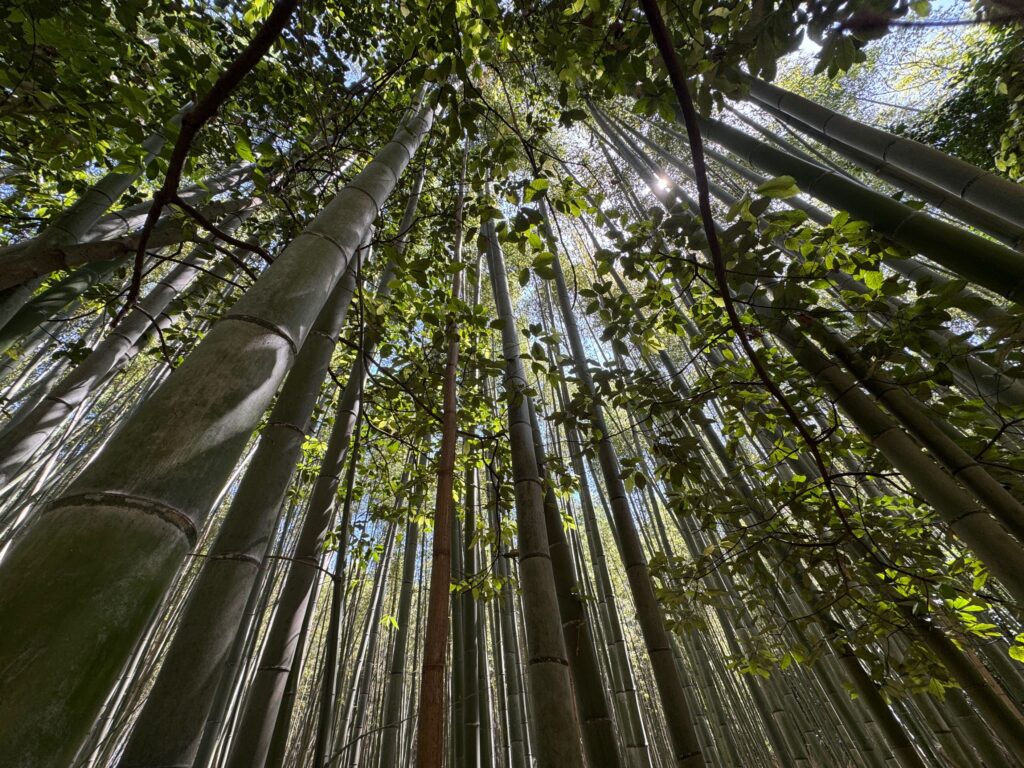
- Kyoto: Just 5-7 minutes’ walk from the massive railway station and it was supernaturally quiet. Like, seriously eerily quiet. There were tiny, cute houses (traditional and modern style, see the latter below) and shrines aplenty as we made our way to the apartment. We used Kyoto as our base to travel to the following locations: Hiroshima to see the peace museum and memorial garden; Nara with its deer park and Todai-ji temple; Arashiyama and the bamboo forest; Inari and the orange-red temple gates; and Kinkaju with its’ Golden Temple. In the process we walked between 20-25,000 steps each day. It was such a pleasure to go to sleep utterly exhausted from walking our legs to a stump (I walk so little in Bali that my health activity app thinks I am now a gas).

- Kyoto: It is an amazing city with a big downtown area and great shops, but also a lovely river flanked by willow and sakura (cherry blossom) trees, There are shrines and temples seemingly around every corner, and winding alleyways and little gems to discover. More than that, there were just too many food establishments to take in, and walking round them – especially the Nishiki covered food market – was my happiest memory. We will do a separate blog shortly about the food we encountered in Japan as it deserves its own piece. Gion is the area famed for being the geisha district, populated by traditional wooden machiya houses with their narrow facades, and with geishas walking the streets. Mahnaz and Anisa looked amazing when they wore their kimonos on our last day in Kyoto, and I enjoyed wearing mine too (my hair and make-up was fabulous). We all felt quite restricted in terms of movement, which I suppose is what, in turn, leads to such considered and thoughtful actions when you wear them.

- Safety: Japan feels like a really safe environment in which to be. Vita and her mother said that crime is very rare in their experience. Children as young as 7 will go to school via public transport on their own. You can leave phones and wallets on tables, and they will be there on your return. To be fair, the phones and wallets situation is true in Bali too. When we come back to the UK, that feeling of complete safety is one of the elements we will miss the most.
- Tips: One of the downsides of travelling in Japan is that you need to have some local currency on you. In central Tokyo, some places took contactless payments, but many more required physical cards and PINs, and preferred cash. Surprisingly, at many of the temples, shrines, and tourist attractions we visited – which were often thronged with thousands of visitors – they only took cash (and the ATMs were often a few miles away). While Japan is undoubtedly expensive it is possible to eat reasonably cheaply, and it’s currently a good time for Brits to travel there as the pound is as strong against the yen as it has been for ages.
Other travel tips: book early for everything if you can. Mahnaz really wanted to see the Studio Ghibli Museum and other attractions, but they were all sold-out. Many visitors order a pocket Wi-Fi device which allows you to connect multiple devices to 24/7 Wi-Fi. Ours stopped working after day one, but it wasn’t problematic as every single restaurant, shop, station, or public building had free and fast Wi-Fi. I also used a cheap e-sim from Revolut for ad hoc journey planning and directions.
One of the drawbacks of visiting Japan in the spring, though, is that the main tourist attractions become very busy from after breakfast right through until sunset. It’s lovely to take a picture in the seeming tranquil of a forest of bamboo or against the backdrop of a temple floating on the water, but less lovely when you have hundreds of noisy tourists with selfie sticks inching into view trying to find the perfect pose. So, if you can plan accordingly – and the weather plays ball – consider visiting places like Arashiyama and Inari and Kinkaju at dawn or at nightfall when they are quieter and reputedly even more beautiful.
- Hotel supplies: We spent our last two nights with Vita and Zanna at their lovely home in Tokyo, but otherwise we stayed at two separate hotels in the capital, the apartment in Kyoto, and a traditional ryokan (Japanese inn) in Hakone. At each, we were encouraged to leave our shoes in the hallway, and there were plentiful supplies of slippers, toiletries, dressing gowns, kimonos, and cotton pyjamas. I regret that our British sense of fair play meant we didn’t smuggle any of them home. The slippers and pyjamas reminded me of a former work colleague from Antigua who lived in Berkshire and married a Japanese woman he met on a flight. He was surprised but delighted to find after marriage that when he returned from work, she would be waiting in the hallway with a set of slippers and a dressing-gown and would encourage him to shower as soon as possible. As well as making his clothes last longer, it felt like a clear demarcation was being made between the outside world and the sanctity of their home. Being of South Asian descent, removing shoes before stepping into the house is standard practice for us, but this was another level. And wearing loungewear and comfortable clothes specifically for indoors has taken off in the UK in recent years too.
- Hiroshima: We took the shinkansen west one morning to Hiroshima, site of the first atomic bomb. It was dropped by the Allied forces at 0815 on 6 August 1945 and was quickly followed by the surrender of the Japanese to end World War II. It was a predictably powerful and moving experience being in this city that has become defined by its greatest tragedy. There were written and video testimonies from survivors, many pictures of and stories about those that had been impacted, and lots of artefacts (clothes, letters, possessions) belonging to the victims, as well as exhibits demonstrating the bomb’s impact on stone, iron and masonry. There were devastating testimonies from survivors talking of their parents or siblings going out for days to look for their family members and never finding them (before succumbing themselves shortly after). The most upsetting for me was reading of a young girl who hung on in agony for days after the bomb, and who was pictured in her coffin surrounded by all her dolls. So many children were killed together as they would have all been at school by 0815.
There was much that I didn’t know: how over 100,000 Japanese had been killed in the bombing of Tokyo and other cities in the months before the A-bomb; the fact the bomb did not land on Hiroshima itself but was detonated about 2000ft above the city; how the Allied plane was over 10 miles away by the time the bomb detonated (I’d always wondered how they got away from the effects of the blast in time); how at 8:15am there was a sudden, blinding light, then darkness, and many people were incinerated on the spot; how so many people died in agony under fallen houses and buildings as the impact was basically like an earthquake; how small fires then snowballed into mass blazes that killed survivors of the initial blast; how black rain fell from the clouds a couple of hours later, and was welcomed by the parched and desperate survivors of that bleak landscape without realising it was basically radioactive; and how many residents died in agony in the days, weeks and months afterwards with blood spots often the dreaded sign that the radiation was about to deliver their death. The museum was admirably non-partisan, but did mention somewhere that the Japanese were prepared to surrender before the bomb, as long as the Emperor was allowed to stay in power as a condition of the peace. It’s not a point on which many WWII historians would agree, as Japan was by this stage of the war run by a hawkish military council who appeared to be honour-bound to fight to the bitter end. Not that I feel this justified the use of the bomb, but it’s easy for me to say that from this vantage point.
In total, 140,000 of the city’s 340,000 population had died by the end of the year.

- Tea ceremony: The museum and memorial garden took up the morning, but at lunchtime we went off to a traditional tea-making ceremony called a chado. I was worried that it would feel inappropriate after spending the morning absorbed in mankind’s inhumanity to mankind, but I’m so grateful Mahnaz booked it as it turned out to be a highlight. We were greeted by three kimono-clad women: the host spoke excellent English and told us of her daughter at university in the UK (she has found the charms of Essex so appealing she doesn’t want to come home). We were taken into different rooms and the history, etiquette, and technique of preparing matcha tea was explained, before we took it in turns to make the matcha for each other. The key takeaway for me was respect: how every step of the process is so controlled and ritualised out of respect for your guests. Even the way the final cup of tea is presented by the host to the guest: you turn the cup two rotations (180 degrees) so that the guest receives the ‘good’ side of the cup facing them. Upon receipt, they then turn the cup a further two rotations so that it is facing the ‘bad’ side again, as a sign of their humility. Every action has a purpose and is delivered with thought.
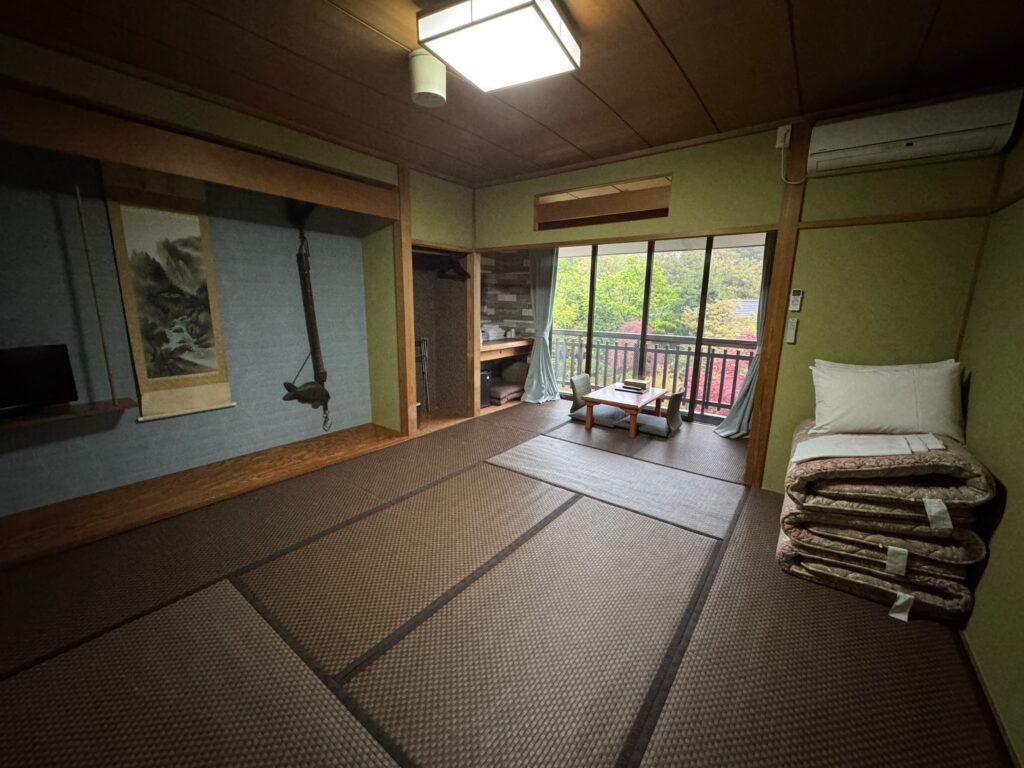
- Hakone: On our way back to Tokyo, we stayed overnight in this spa town famed for its natural hot springs and its views of Mount Fuji, but sadly the cloudy weather meant we never saw the sacred mountain. The ryokan we stayed at featured balcony views of the cool, lush mountainside. The 12 traditional rooms were matted with tatami, a hard, almost straw-like matting, whilst we slept on futons and enjoyed wearing the supplied yukata (kimono-style robes). The USP of our ryokan was the onsen (hot springs) – traditionally this is a communal facility, but ours had two individual ones. I went down at dawn to use one and there was not a soul in sight, just the sound of the birds in the mountain trees. The water was extremely hot indeed but immediately relaxing, and it was a lovely start to the morning.
- Behaviour: During our trip, I rarely saw a Japanese couple holding hands or showing any real public displays of affection. Disconcertingly, I found that Japanese people often didn’t look me in the eye, even when talking to me. This may be part of their innate reserve, or it may also be an age-related thing with the young seemingly more open to engagement with strangers. They were always extremely hospitable, though, with locals prepared to miss trains to help us check our route, or even to change their own route to accompany us. Ostensibly many Japanese social interactions seem to be based around being inordinately helpful, not making a fuss about themselves nor making others feel uncomfortable. It leads to an extremely well-mannered and ordered society … but is this to their detriment? And by its very nature does this self-imposed restraint inevitably beget the darker aspects glimpsed in the underbelly of their character and society? I am fascinated by this contrast between light and darkness there. The extremes of orthodoxy and the quest for perfection, the most ethereal and reverent poetry and art … balanced against their commitment to the anarchic and the outright bizarre, the energy and crudeness of manga and anime and punk and even seedier aspects of their culture.
That first Friday night in Tokyo was the one time we saw their youth being boisterous, outside a nightclub. But it was without any of the aggression or rowdiness of their Western counterparts. We did see a fair few young people during our time there who wore strikingly original or fetishistic clothing that would have turned heads on Carnaby Street or Camden Lock. However, there were many more young Japanese who dressed exactly as I imagine their parents or grandparents would have done. How do the Japanese young reconcile the traditions of their past with the excitement of a global future?
- Cats and dogs: On our last day, we managed to get to Shibuya again to see the famous statue of Hachiko which we had missed a week earlier. Hachiko is the Akita dog who used to greet his owner at Shibuya train station each evening on his way home from work. One day the owner sadly died at work, but Hachiko continued to come to the station every night at the time of his owner’s train hoping to see him. He did this for over 9 years and is seen as the embodiment of Japanese loyalty and dedication. We then demurred on the charms of pig and otter cafes, and went to a cat café where we had 45 minutes of aahing and cooing at these gorgeous, calm creatures. They were very fluffy too, which meant a fair bit of sniffling and sneezing given how much fur was in the air and on the upholstery. One of Anisa’s highlights, I know.

- What we didn’t see: We never got to see Mount Fuji as the weather was too cloudy on many of the days we were near and we didn’t have time to fit in a day trip there. The sakura properly blossomed 3-4 weeks before our arrival, so we saw only a few late-blooming examples of this. I would love to attend a sumo event, a baseball match or visit the Bukodan arena where the Beatles played in 1966. Osaka is supposed to be the food capital of Japan, and Hokkaido apparently has the most amazing scenery and beaches. Everyone I speak to who has visited Japan recommends must-see locations that I haven’t even heard of. There will never be enough time to see everything, but the more I read about this amazing country the more reasons I find to want to return.
- Japanese toilets: To conclude, a subject that could merit a blog of its own. Let’s keep things tasteful and say that Japanese toilets justify their celebrated reputation. From the little puff of air as you sit on the warmed seat, to the tasteful waterfall music you can play if you wish to mask any sounds, to the nozzles with multiple positions for washing and drying, it was always a pleasure to use. There was not a single facility I went to – train stations included – where the gents’ toilets were anything other than pristine, and it made being comfortable when travelling around so easy. How must Japanese visitors to the UK feel when they go to a toilet in a British pub, station, or concert venue? I shudder to think … and not just because I’m thinking of that scene in the film Trainspotting!

Japanese phrase of the week: “Ichigo ichie” which fittingly means ‘once in a lifetime’.
23/05/25
We hope to hear from you in the comments below 🙂
13 Comments
Thanks for your travel tips. Interesting to read about Japanese behaviour. Japan is on my bucket list. Look forward to your food blog.
Best wishes ❤️
Thanks Alpa 💚
Oh my goodness – such a joy reading this! Thank you for sharing, I feel like I’m there with you all xx
🥰
Blimey what an experience! I think I’d come home and sleep for a week after that! Once again thank you for sharing, more content for the book that I really hope you do!! I’m going to send this to my friend if that’s ok who is going to Japan in October, she’s wanted to go for so long, she’s a chef and I know she’ll absolutely love it. That little girl Mahnaz! The way she’s looking at you, so beautiful! Xxx
Feel free to share with your friend, Juliet. As a chef Suleiman recommends Osaka – apparently the food capital of Japan.
It was an exhausting trip and so worth it for all three of us. Not sure about the book but we’ll see! 🙏🏽
I would definitely recommend your friend plans as much as she can in advance, Juliet.
I didn’t even mention – because we didn’t do this – that all the big shops offer cheaper tax-free prices to tourists. But we didn’t research this in advance and whilst I saw the queue at the airport we were fed up of queuing by that point. And we weren’t planning to do much shopping.
But definitely put aside a couple of days (at least) to just potter around as there is too much to see, and one of the joys is to just stumble on new discoveries.
Ah – thank you so much for this! I very much enjoyed reading it in bed this morning. Kyoto came onto my radar recently and I’d love to go… but now I also have other places to visit (not least an otter café!). It sounds like an absolutely fascinating country, and I appreciate you ‘boldly going before’!
I hope you’re well and continue to be happy. What an incredible year this has become for you! Sending you loads of love xx
Our pleasure, Olivia! So lovely to hear from you 🥰 It is definitely an adventure and we are feeling so blessed and lucky to have had this opportunity 🙏🏽
You won’t regret going to Kyoto, Olivia.
Tokyo is essential too, very much the ying to Kyoto’s yang!
What a start to a day! Vicariously travelled through you from my bed in E17!! Japan looks just amazing and what experiences you are providing Anisa so young – life changing! Great photos and love that you put commentry under them
PS where’s your orange coat from – I love it!!
Wishing you so much joy and fun
Nat x
Thanks lovely Nat. Glad you’re enjoying reading this.
The jacket is Suleimans – from Uniqlo.
Sending tonnes of love your way xx
The orange rain jacket is my favourite purchase in Bali! I got a blue one for Anisa too.
It’s a really light rain jacket from Uniqlo, and it folds up into being really small.
Was the equivalent of £50 here, but ideal given how humid it can be here.